
Vapor Recovery Process
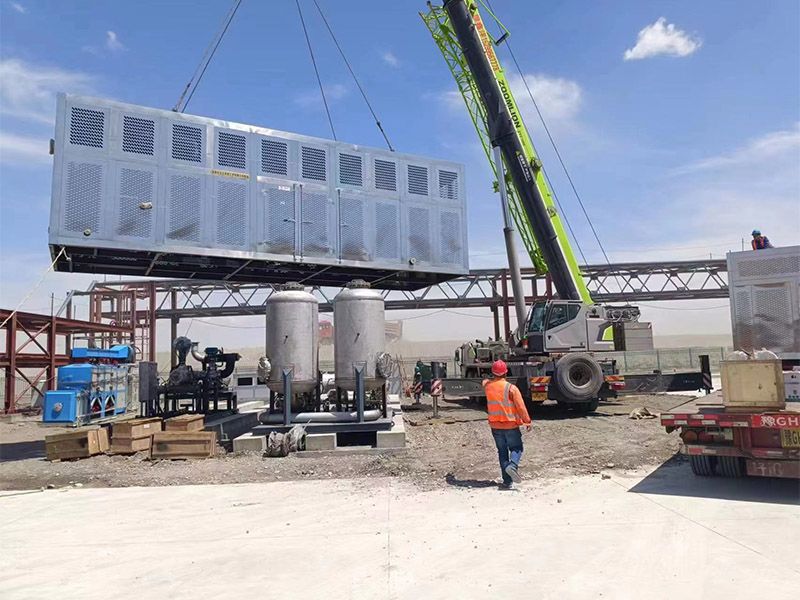
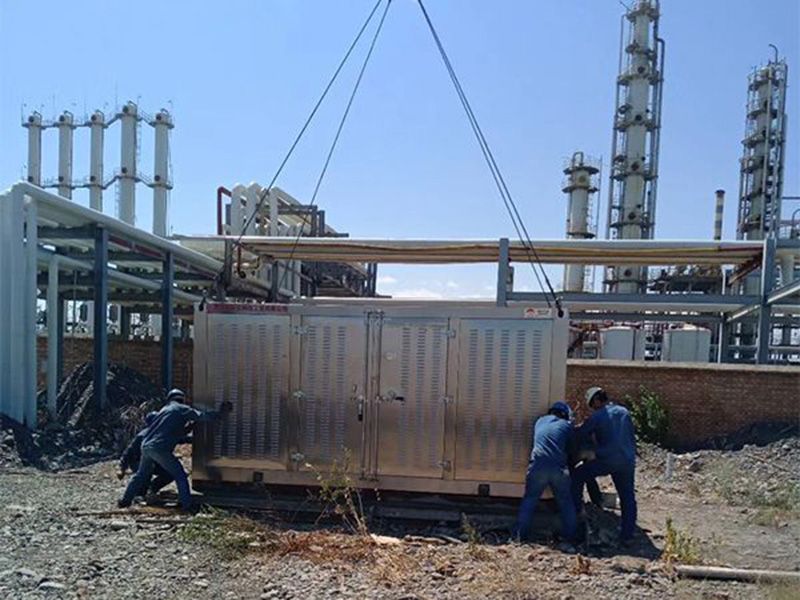
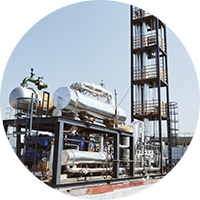
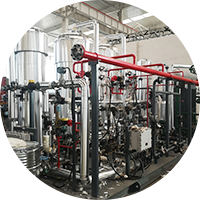
Condensation uses refrigeration technology to remove heat from oil and gas, achieving a direct conversion of oil and gas components from the gas phase to the liquid phase. By exploiting the differences in vapor pressure of hydrocarbon substances at different temperatures, cooling brings certain hydrocarbons in the oil and gas to a supersaturated state, where the supersaturated vapor condenses into liquid to recover the oil and gas. Typically, a multi-stage continuous cooling method is used to lower the temperature of the oil and gas so it condenses into a liquid for recovery. The minimum temperature of the condensation unit is determined based on the composition of the emitted vapor, the required recovery rate, and the limit on organic compound concentration in the tail gas discharged to the atmosphere. Condensation is generally achieved through steps such as pre-cooling and mechanical refrigeration. The pre-cooling stage reduces the operating energy consumption of the recovery unit by lowering the temperature of the incoming gas from ambient to around 5°C, causing most of the water vapor in the gas to condense into water and removing the moisture. After pre-cooling, the oil and gas enters the shallow cooling stage, which cools the gas to around -35°C and allows 70–80% of the hydrocarbon components to liquefy. The oil and gas leaving the shallow cooling stage then enters the deep cooling stage, which can cool it to around -70°C and recover more than 95% of the oil and gas.
The residual gas after condensation at -70°C still contains a small amount of hydrocarbon components and cannot meet the emission limits specified by national standards. To achieve compliant emissions using condensation alone would require cooling to around -110°C, which recovers only an additional 3–4% of the oil and gas while increasing energy consumption by about 30%—a very poor cost-performance ratio. Therefore, for the residual gas after -70°C, the pressure swing adsorption (PSA) process is adopted: the gas is directed into an activated carbon adsorption unit for adsorption, enriched and concentrated, and then sent for condensation treatment to achieve compliant tail gas emissions. When the adsorber becomes saturated, a vacuum pump evacuates it, reducing the pressure inside and breaking the adsorption equilibrium so that the oil and gas adsorbed in the unit is released and sent via the vacuum pump to the front end of the condensation process for re-condensation and recovery.
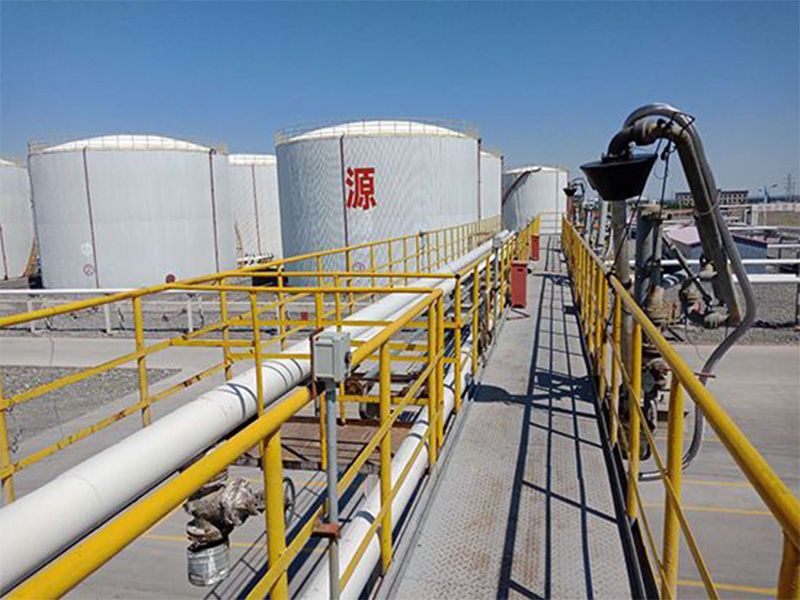
In practice, VOC (volatile organic compound) emissions occur in two scenarios: one is low flow with high concentration (flow below 2000 m³/h and concentration above 500 g/m³), the other is high flow with low concentration (flow from 2000 to tens of thousands of m³/h, with concentration of only a few g/m³ or lower). For the former, a "condensation + adsorption combination process" is used, condensing and liquefying for recovery first; for the latter, an "adsorption + condensation combination process" is used, where an adsorbent first enriches the hydrocarbon components and allows the bulk of the air to be discharged, then the enriched hydrocarbon components are desorbed to obtain a concentrated organic gas, which is then condensed and liquefied for recovery. Since petroleum storage and transportation essentially fall into the former scenario and treatment method—commonly referred to as vapor recovery—we focus here on the "condensation + adsorption combination process." The adsorption step uses pressure swing adsorption (PSA) for desorption, and is therefore also called the "condensation + PSA process."
The above is the knowledge about the vapor recovery process compiled by the editorial team of Heze Huawang Technology Industry & Trade Co., Ltd., and we hope it is helpful to you.
| Previous:Company Organizes Management Knowledge Training | Next item:Company Organizes Management Knowledge Training |